Southern Lights
Poolside Reflections
FLOATER’S BLOG: Pool Date - December 10th, 2025
I have to initiate this blog with an apology to those who live in the southern hemisphere as to my ignorance on this subject matter prior to my recent research.
My blog title still stands, but I realize I must only use it in the context of what I am about to describe, which is what I have seen here at The Villa in Nicaragua, about 11° north of the equator; float central for my participation in beerfloat.calm.
As someone who grew up in Canada, I have been aware of the Northern Lights, the aurora borealis, since I can remember, as I was able to witness them many times from the suburban home of my childhood on the ‘then’ outskirts of Toronto.
As I grew older, viewings had to be from more remote settings north of Toronto as haze and light pollution would reduce the visibility of this amazing phenomenon.
I think my best viewing ever was on an evening flight from Toronto to Saskatoon, in the province of Saskatchewan. I had selected a right-side window seat, as window is my preference, and I had chosen to look north in hopes of catching an observation. Not only did I see the aurora, but I had my face peeled to the glass (okay, it’s acrylic plastic, but glass sounds better) because almost as soon as we were up and headed west, there it was. On this viewing it appeared as a shimmering green curtain, bright and undulating in a tall horizon to horizon line for almost the entire flight. Because of the reflection from the bright cabin, I used my hands as a shield wrapped around my eyes, in a similar pose as to holding a pair of binoculars, plus I pulled my hoodie up as another block of the extraneous interior light on the aircraft. What a sight!
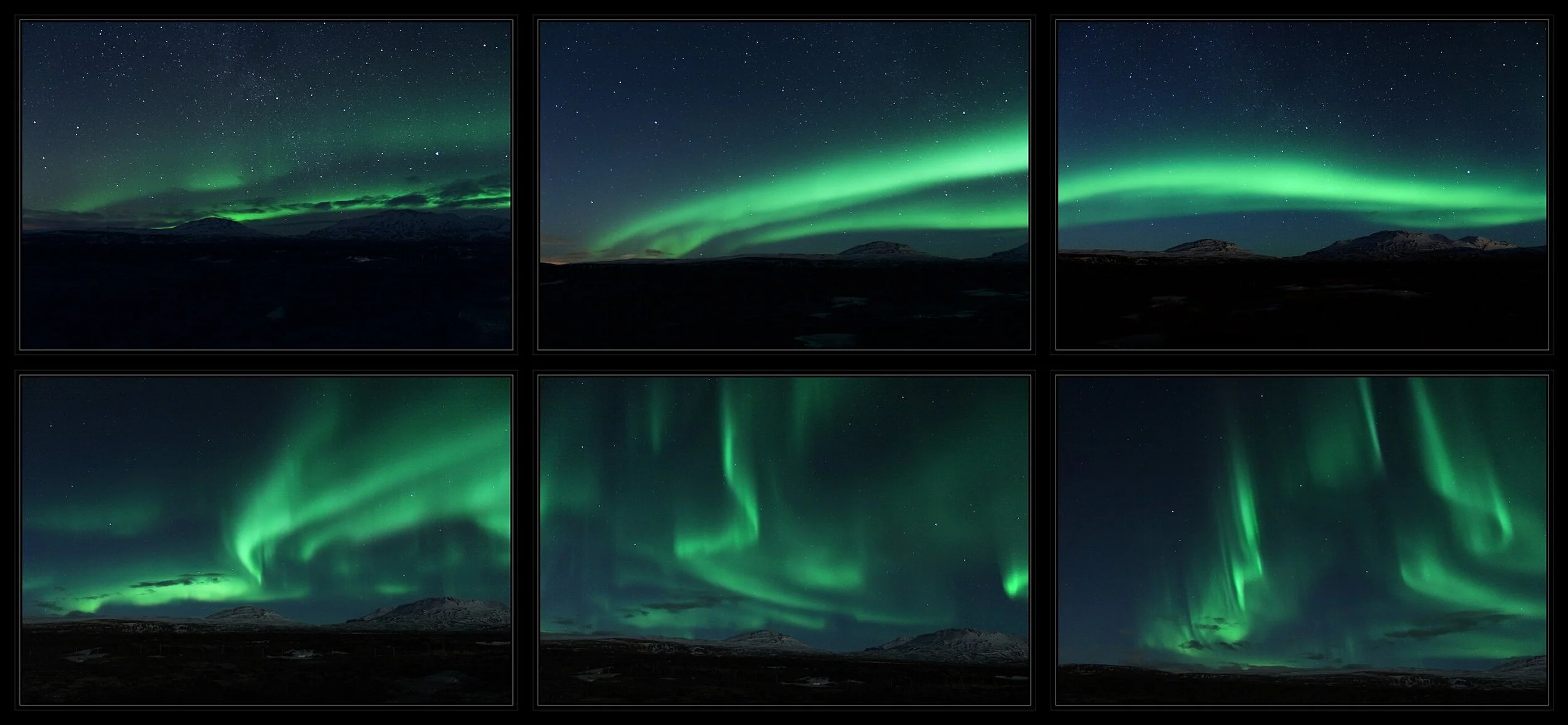
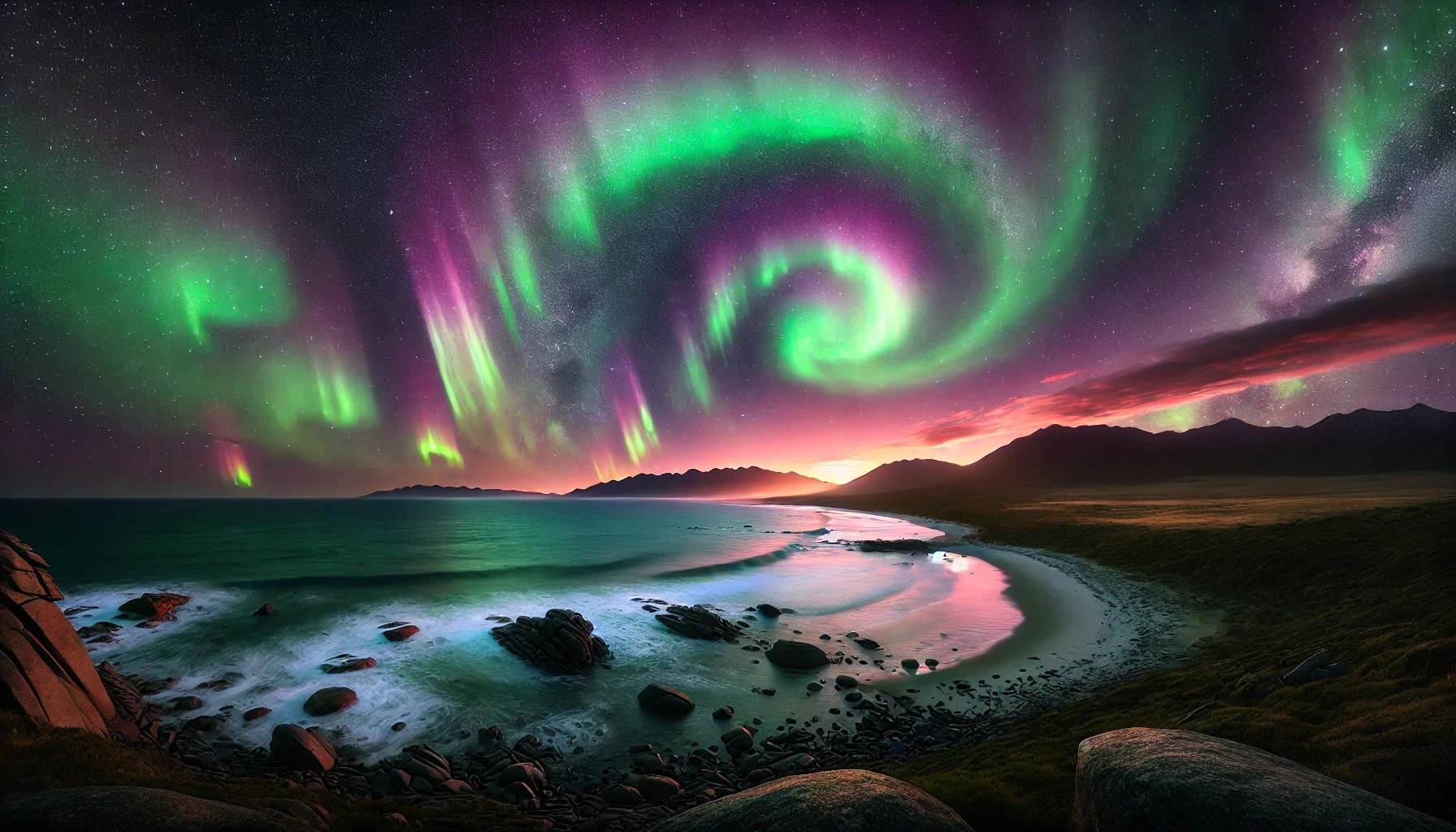
Well, that is the Northern Lights, and for such a long time I thought they only occurred in the northern hemisphere. Much to my chagrin, during research for this writing I now realize there are also Southern Lights, the aurora australis, which are visible from South America, South Africa and Australasia.
The word aurora is the name of the Roman goddess of the dawn and became a label for this spectacle in the early 1600’s. Other planets, comets and ‘failed to form stars’ known as brown dwarfs also host auroras.
On Earth, their appearance is caused by disturbances caused by enhanced speeds of solar wind which alter the trajectories of charged particles in the plasma in the magnetosphere. Obviously!
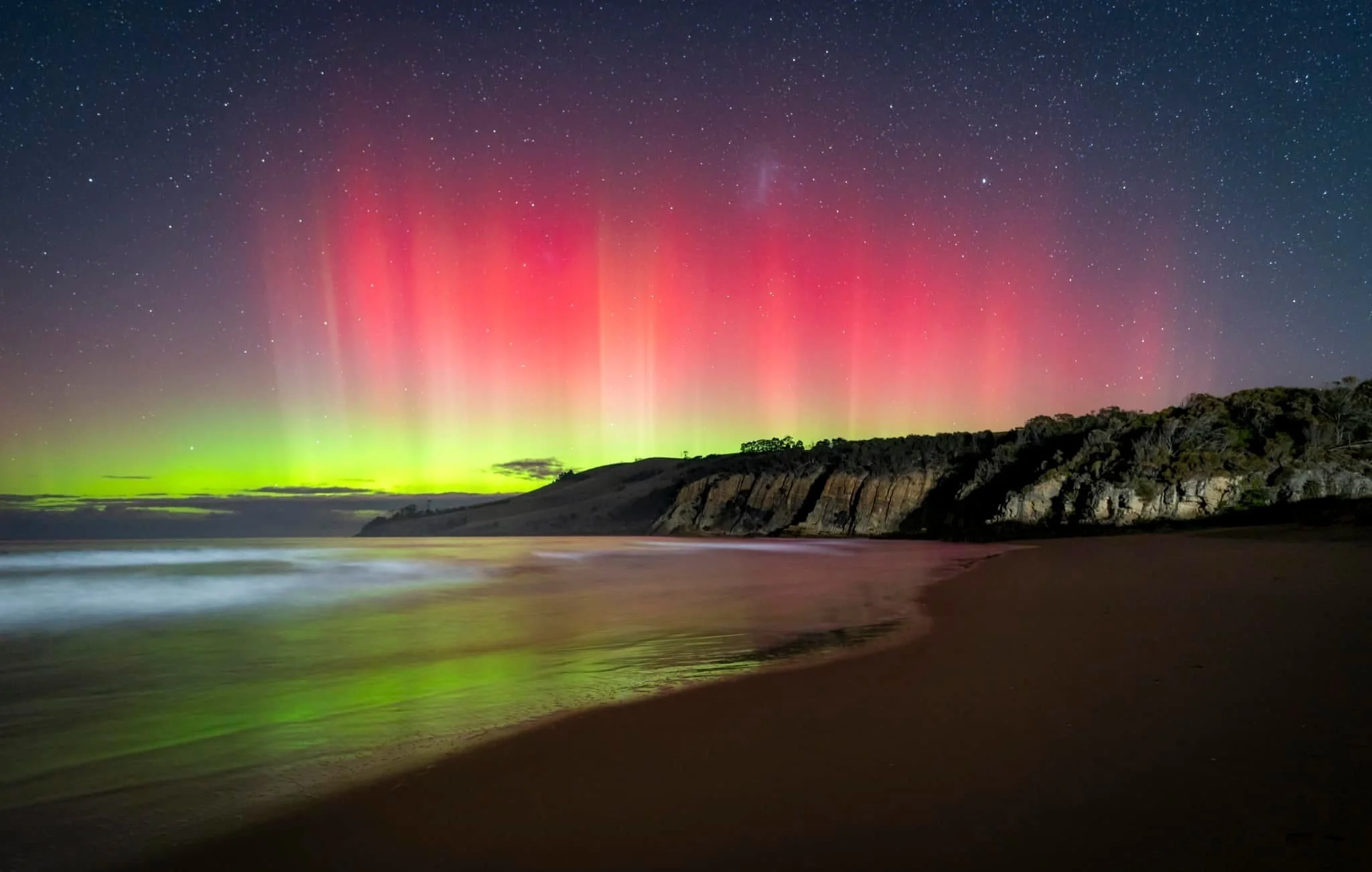
Auroras are most commonly observed in bands around our globe centred on 67° north and south. Their appearance may take a variety of forms, from mild glows, brighter patches, arcs, rays and spectacular corona auroras which cover much of the sky and diverge from one point. Any colour in the rainbow in any combination is possible but green and red sightings are the most frequent.
Once again, my apologies for my ignorance because I have been using the term Southern Lights to describe a different light phenomenon which occurs on my pool deck, or more accurately, on the edge and underside of the roof overhang on the shade terraza beside the pool deck here at The Villa.
My Southern Lights (if I may call them that, I mean Nicaragua is definitely south of Canada, where everyone says I’m going south for the winter or wants to be able to say that, even if only 5% of those folks who do are actually crossing the equator) [whew, that was a long bracketed comment], are (I’m talking about the lights again) a wonderful sight to behold on their own!
Here's that sentence without all the brackets.
My Southern Lights are a wonderful sight to behold on their own!
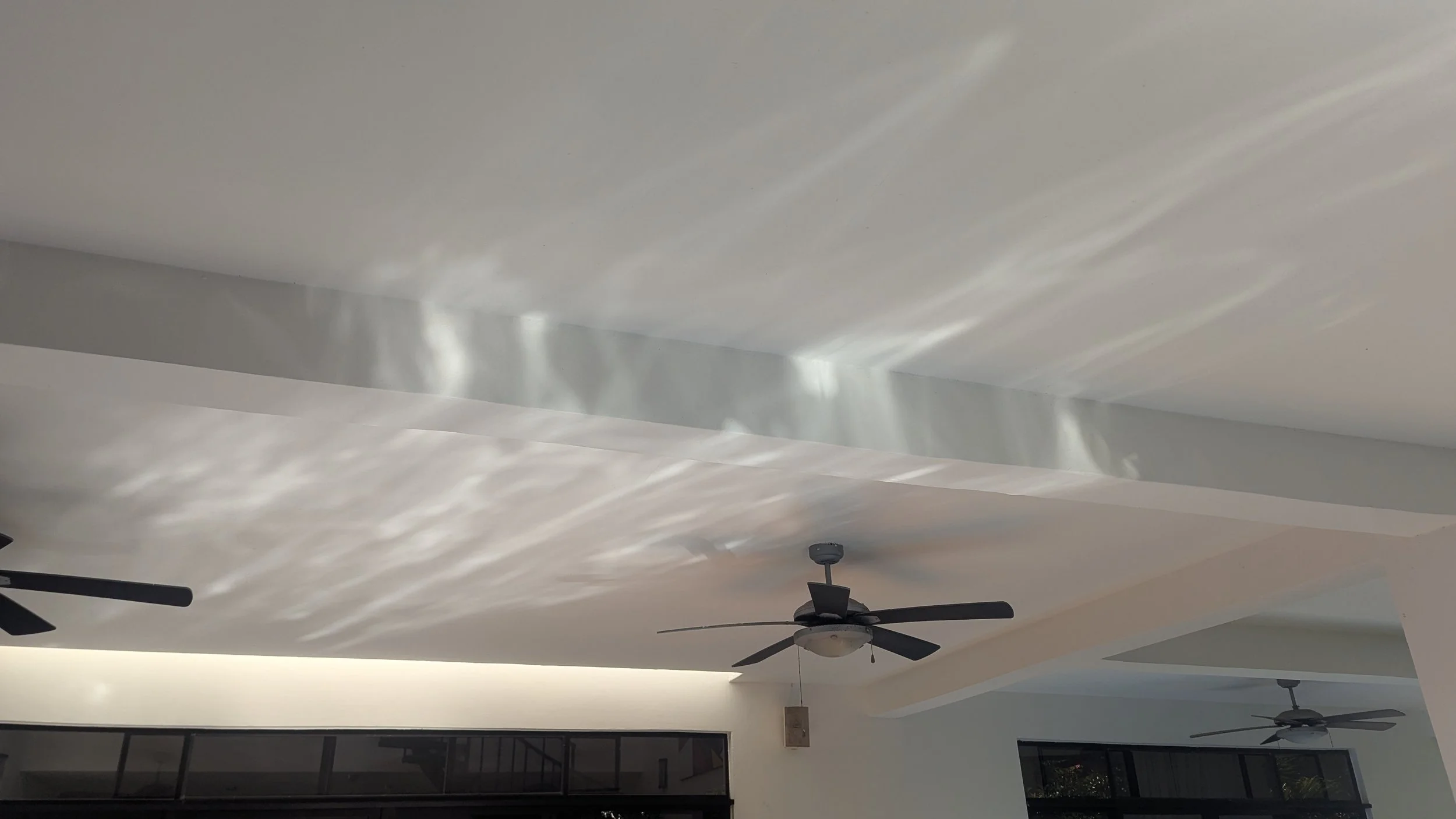
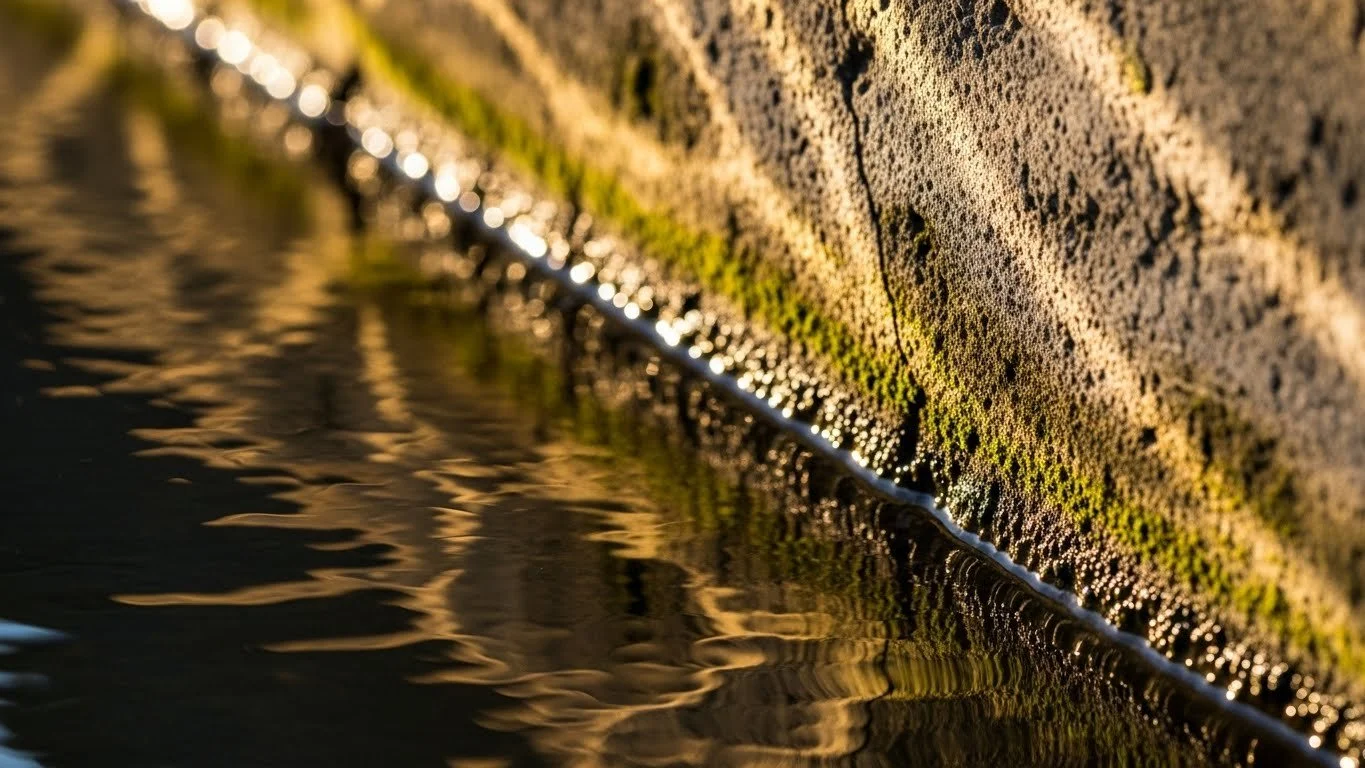
Just like with a real aurora, photos don’t do it justice. What I am able to see, on any sunny afternoon, is a monochrome shimmering pattern akin to the auroras, thus the name.
What happens is, once the sun has passed about 15 degrees west from directly overhead, I get a reflection from the pool water surface which bounces up towards the house. The first object it hits is the overhang and with the white painted surface acting like a movie screen the projection of the Southern Lights begins. Due to the nature of the Earth’s rotational changes, it happens at different times throughout the year and only lasts for about an hour or two as the sun’s western motion takes it behind the tree line of the garden and a large hill at this end of town. While it is visible, the reflected patterns gradually drift across the building along with the sun’s motion.
The great thing about viewing the Southern Lights while enjoying a beerfloat is that you can control the motion pattern to a degree by simply rocking your raft to make bigger waves in the water. The enhanced liquid surface disruption is reflected on the viewing planes, usually with an increased fervor to the light motion. As you stop moving, the water settles and the ‘lights’ once again calm to gentle movement.
A few days back during a night featuring a Supermoon, a couple of us were able to see a dimmer version of the Southern Lights which gave rise to this writing.
I am sure that similar reflections happen almost anywhere that the sun (or any bright light), water (or any liquid for that matter) and a surface for the reflection to display upon occur in unison.
So, whether it is the northern aurora borealis, the ‘real’ Southern Lights or just a poolside reflection, I recommend keeping your eyes peeled for the intriguing visualizations Ma Nature and humankind have created for our sensory pleasure.
Making waves,
Corliss
beer float.calm = beerfloat.net not beerfloat.com